 With Cape Point
Guides
Language
EnglishCurrency
US dollar · $On GetYourGuide you see prices in this currency.
Guide · The colony
Boulders Beach and its African penguin colony
A sheltered cove in Simon's Town, a few boardwalks and a colony of wild African penguins: here is how Boulders Beach works, what the gate costs and how to spend your time there.
Check availabilityfrom $37 · free to cancel
Editorial team, capetownpenguins.comUpdated October 26, 20266-minute read40 sources
Quick answer
- 02What you see
- Wild African penguins, best from the boardwalks at Foxy Beach.3
- 03Entry
- A SANParks conservation fee, R282 for an international adult, 1 November 2026 to 31 October 2027.4
- 04Hours
- From 07:00 to 19:30 in December and January, shorter the rest of the year.5
- 05Easiest way in
- A day tour from Cape Town with about an hour at the colony.
A colony at the edge of a naval town
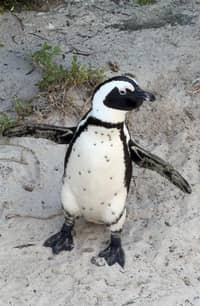
Boulders Beach is a small sandy cove on the edge of Simon's Town, and its fame comes from the birds rather than the sand. SANParks describes a unique, endangered, land-based colony of African penguins living here, inside Table Mountain National Park.1 Houses climb the slope behind the beach, and the penguins nest among the bushes and boulders right below them.
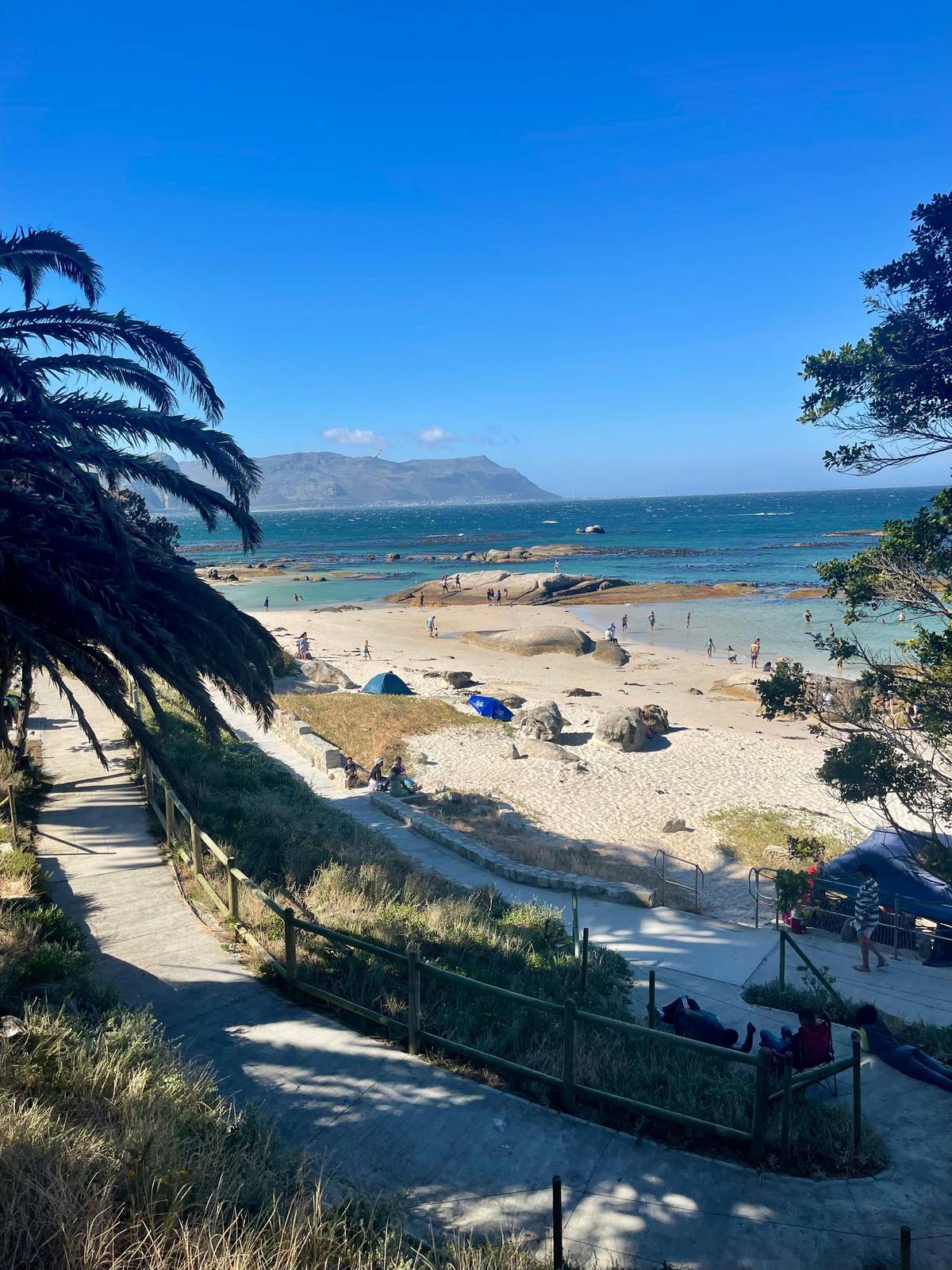
The cove lies between Simon's Town and Cape Point, sheltered from the open ocean, and SANParks calls it world famous for its penguins and its safe, wind-sheltered beaches.2 If you are still asking where is Boulders Beach on the map, picture the False Bay side of the Cape Peninsula, a little south of the town centre, with the coast road running above it.
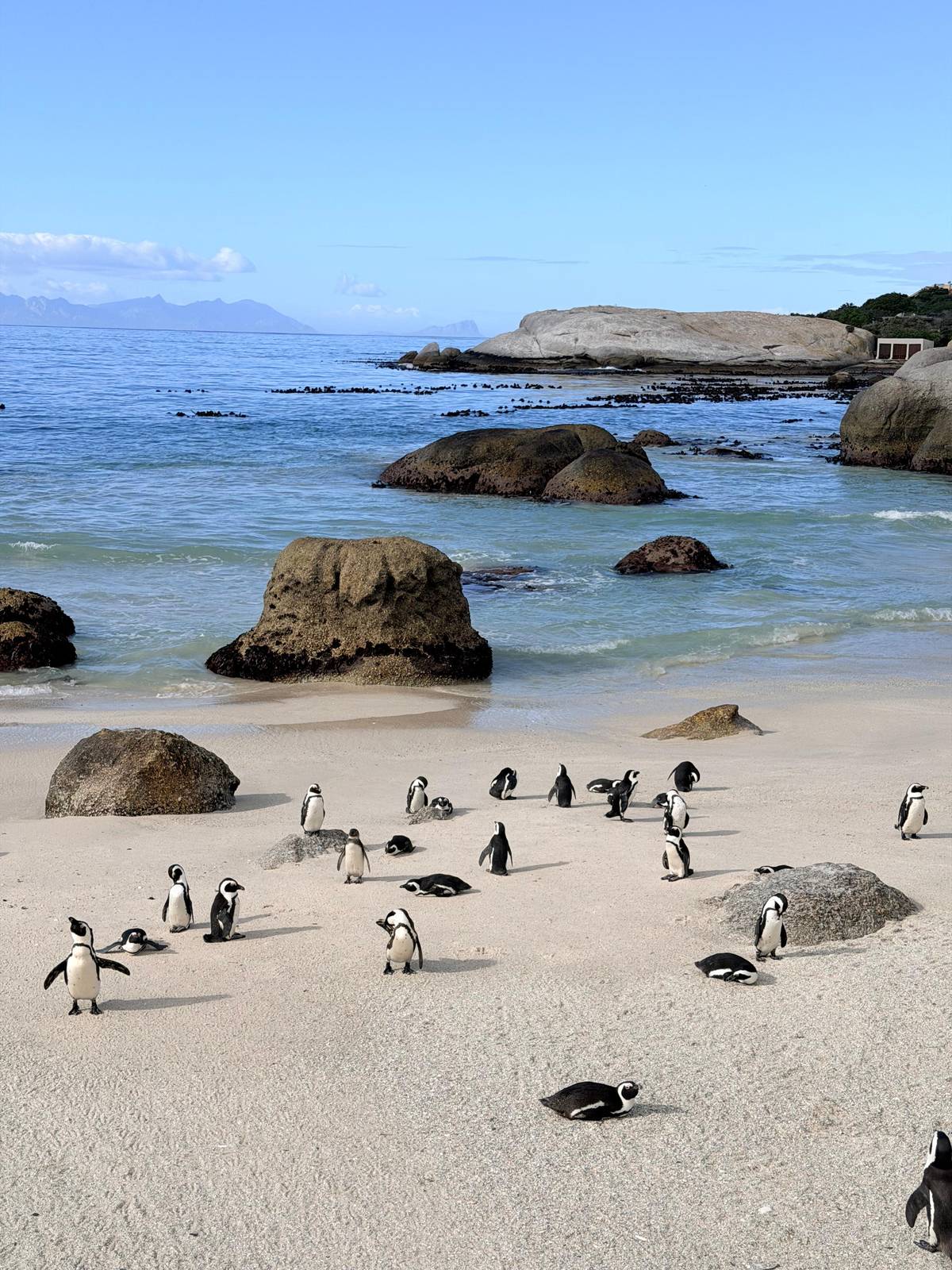
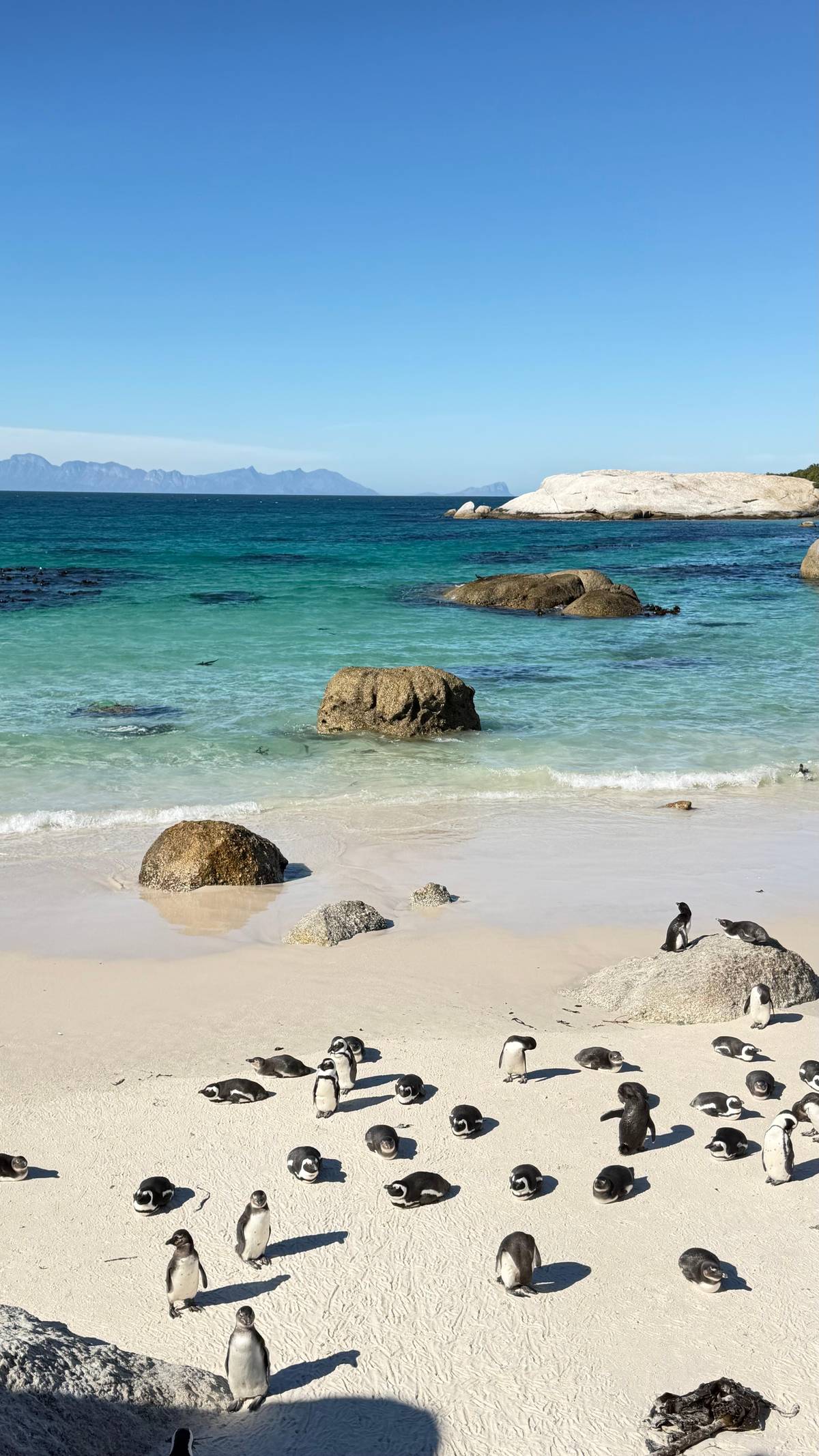
The granite boulders that give the place its name are old beyond imagining: the SANParks brochure dates them at 540 million years.6 They split the shore into small bays, and each bay plays a different role, from penguin nursery to swimming spot. Climb onto a low rock at the edge of the cove and you see the pattern at once: sand, granite, clear green water, and penguins dotted over all of it.
Colony history
From a couple of nests to a famous colony
-
1982
The first pairs
The SANParks brochure counts just two breeding pairs at Boulders.7
-
1983
Colony established
SANParks dates the Boulders colony to this year.8
-
2005
The peak count
Numbers reach 3,900 birds, helped by birds from nearby islands.8
-
2011
A decline
SANParks puts the colony at around 2,100 birds.8
-
2024
Critically Endangered
The IUCN uplists the African penguin, as SANCCOB reported.9
Three beaches, three boardwalks
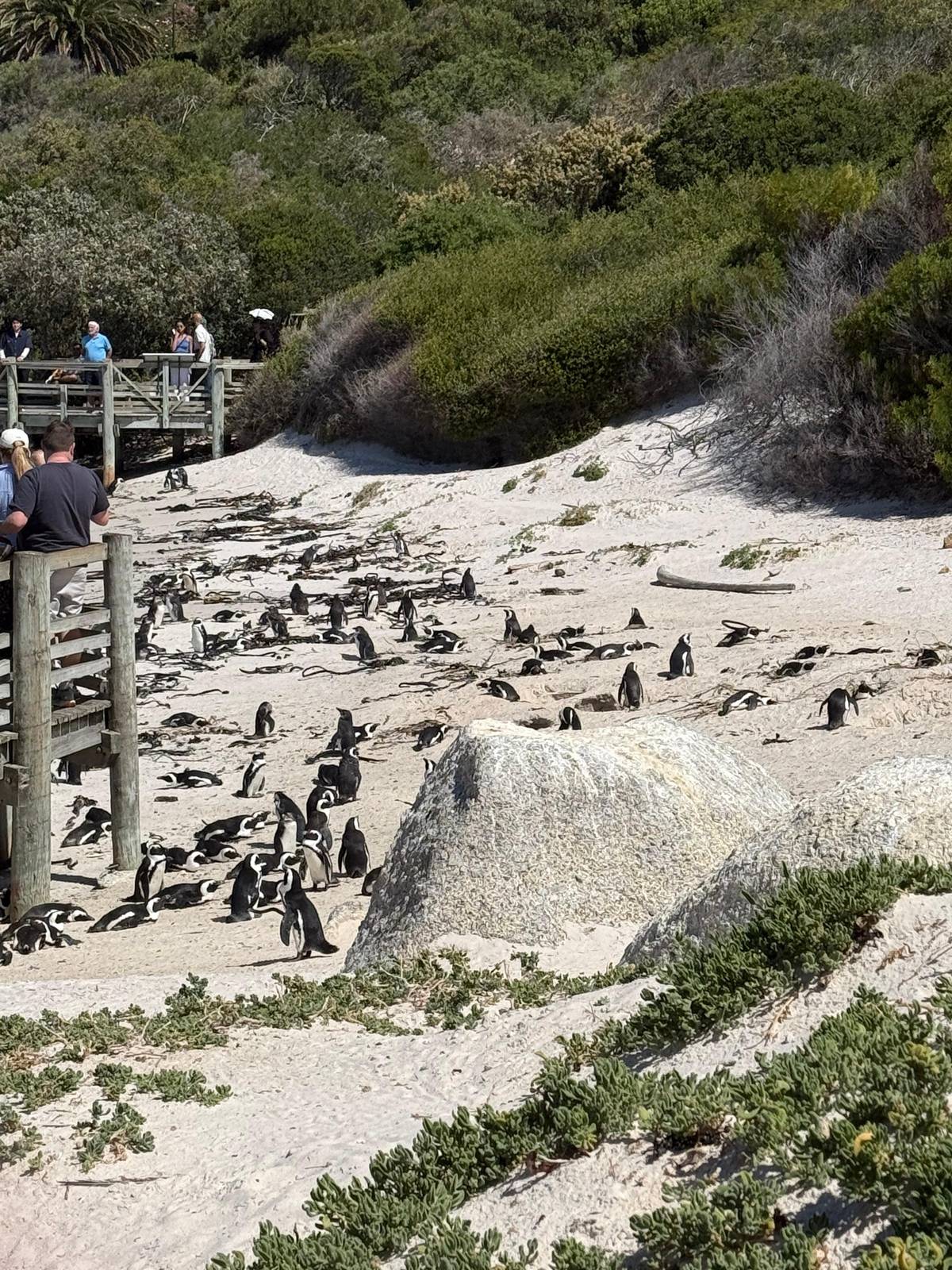
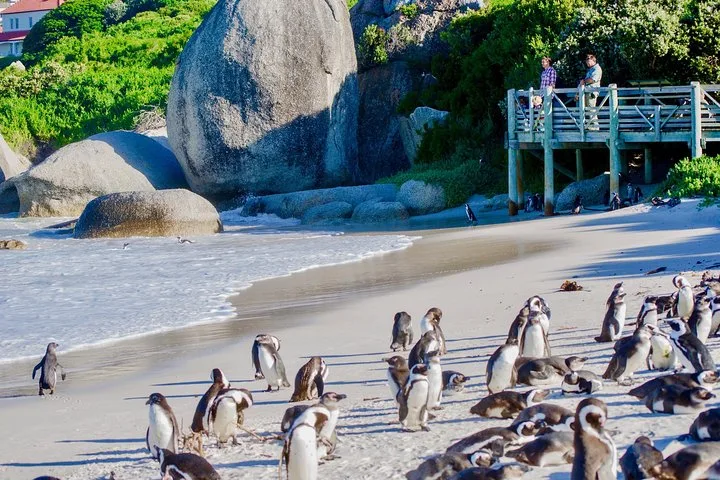
The Boulders section has 3 beaches, 1 penguin viewing area and 3 boardwalks.10 Most visitors come for Foxy Beach, where SANParks says the penguins are best viewed, because the boardwalks take you right down to the birds on the sand.3 Boulders Beach itself is the most popular spot for recreation, and the place where people sit, picnic and swim.311
The boardwalks are there for a reason. SANParks built them so you can watch the birds while the birds stay safe from poking fingers, and asks you to stay on them at all times inside the viewing area.12 From the railing you look down onto nesting birds, a crowded beach of standing penguins and the clear water of the bay.
Seaforth Beach lies on the town side of the colony, and Willis Walk runs along the shore between them.13 Dogs are allowed on that walk only on a leash and never on the Boulders beaches, so the penguins can nest without being chased.13
Three ways in
A full day, a half day or a long day with a town stop
With Cape Point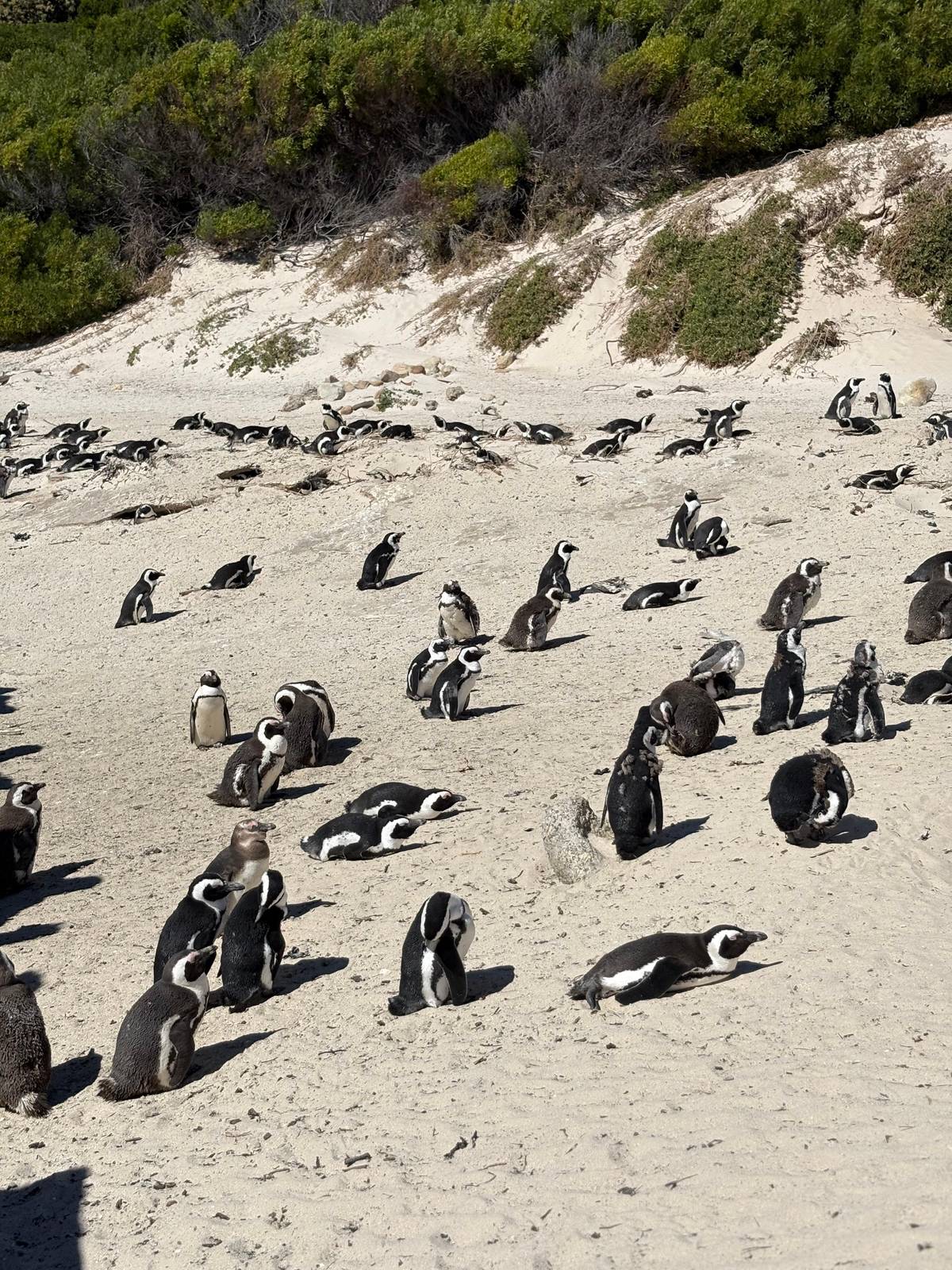 More penguin time
 Town stop
Decision helper
How should you visit the colony?
Pick what matters most to you.
The 8-hour coach day
About an hour at Boulders and about 2 at Cape Point.
A half day
One listing gives the colony 2 hours.
Go on your own
Arrive early in summer, as parking is limited.16
Ride to Simon's Town
A railway runs there along the False Bay coast.17
Boulders Beach itself
SANParks lists swimming among its activities.11
Nestled in a sheltered cove between Simon’s Town and Cape Point, Boulders has become world famous for its thriving colony of African Penguins and magnificent wind sheltered, safe beaches.
How the African penguins live here
SANParks dates the colony to 1983, and its brochure says it began with just two breeding pairs in 1982.87 It grew to 3,900 birds in 2005, then fell, to around 2,100 birds in 2011.8 The brochure gives about 2,200 in recent years, partly because less commercial trawling in False Bay left more pilchards and anchovies for them.7
The Boulders Beach penguins follow a clear yearly rhythm. Moulting peaks in December, they return in January to mate, and they nest from about February to August.18 During the moult they stay on land for about 21 days without feeding, which is why some birds look ragged and stand still for long periods.19
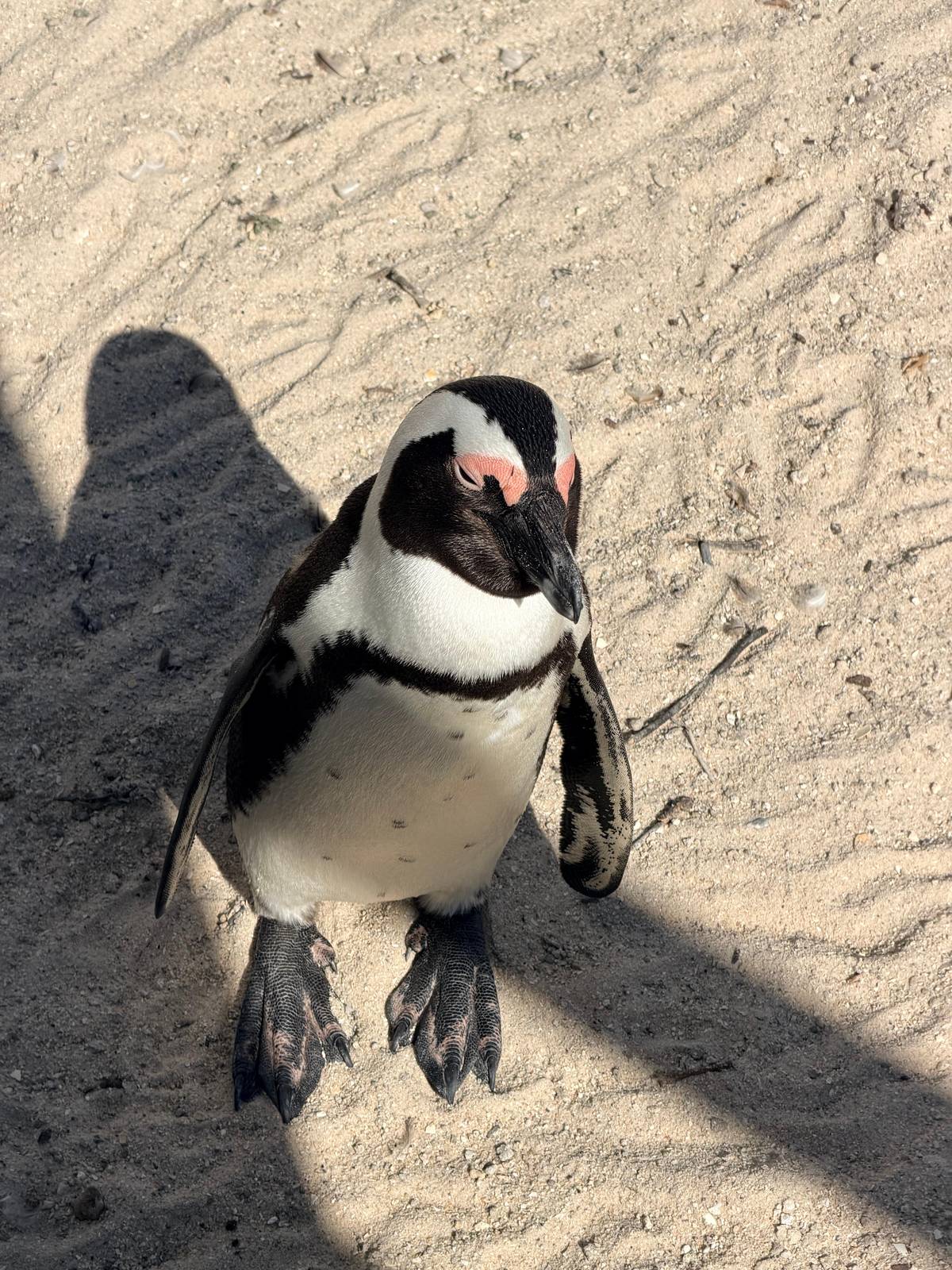
Watch for the small details. Chicks in grey down cannot swim yet, because their down is not waterproof, and from about 30 days old they are left in groups while both parents fish.20 On a quiet morning you can watch a pair take turns at the nest, which SANParks says partners do for life.21
Map
Boulders, the peninsula and the point
First the beaches and boardwalks of the Boulders colony, then the coast from the V&A Waterfront to Cape Point and across False Bay to Stony Point, then the two capes at the tip.
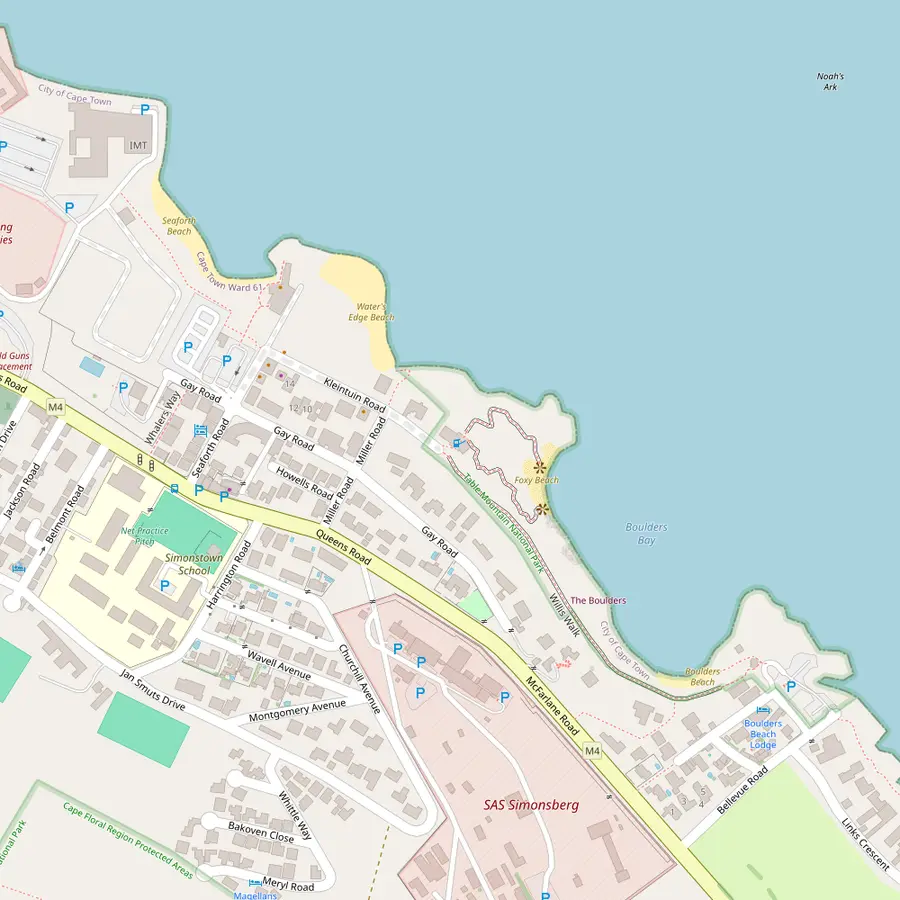 1Seaforth Beach2Boulders Visitor Centre3Foxy Beach4Boulders Beach
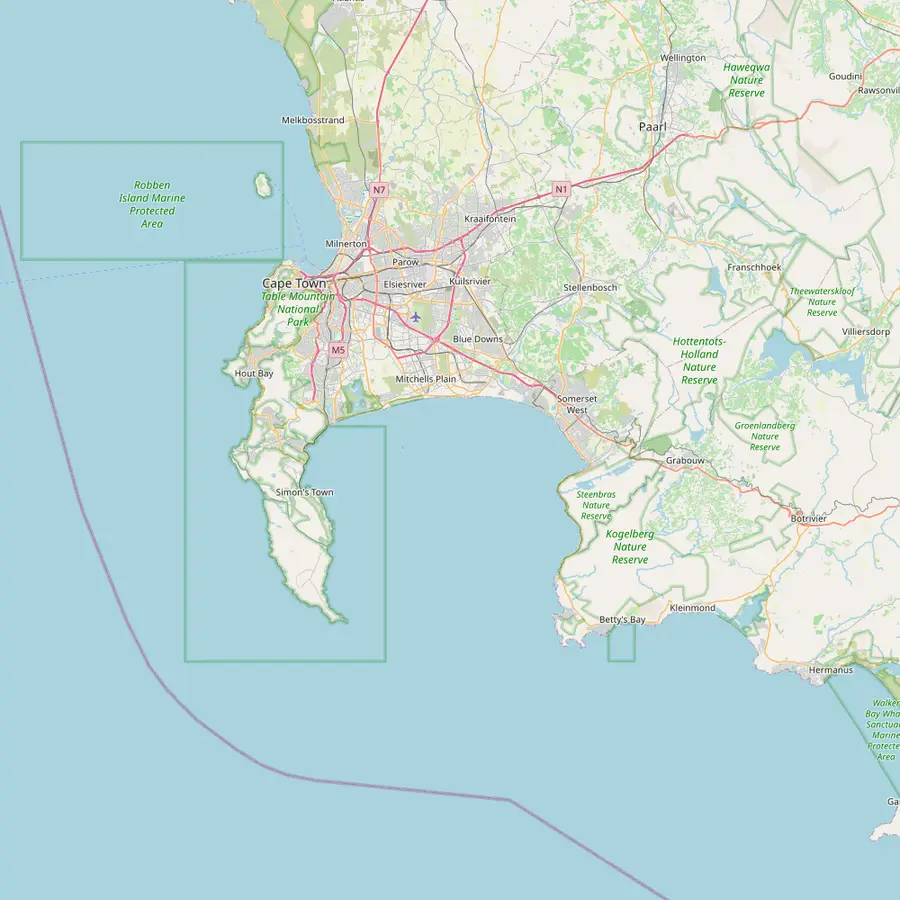 5V&A Waterfront6Muizenberg7Simon's Town8Cape Point9Stony Point
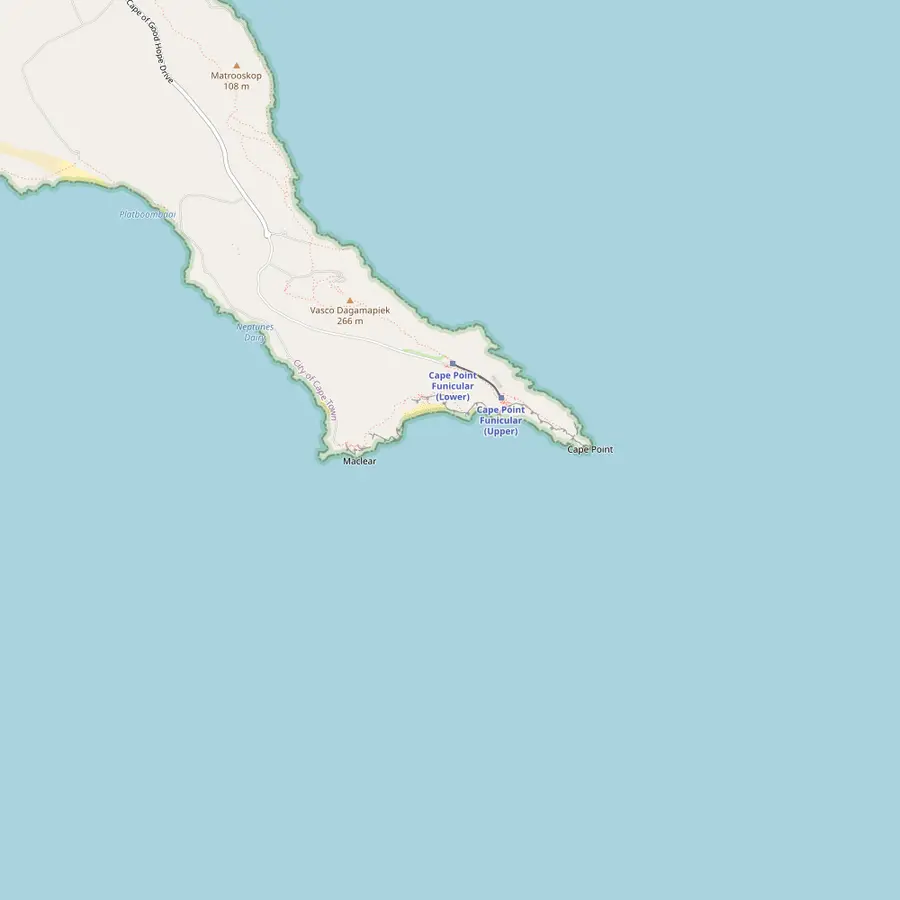 10Cape of Good Hope11Cape Point lighthouse
- 1Seaforth Beach
The beach on the town side of the colony, joined to Boulders by Willis Walk, where dogs may go only on a leash.13
In Google Maps ↗ - 2Boulders Visitor Centre
The visitor centre on the boardwalk route; SANParks lists Boulders as a pay point for the daily conservation fee.22
In Google Maps ↗ - 3Foxy Beach
SANParks says the penguins are best viewed here, from the boardwalks.312
In Google Maps ↗ - 4Boulders Beach
The most popular spot for a swim, sheltered by huge granite boulders.323
In Google Maps ↗ - 5V&A Waterfront
The day tour leaves at 09:30 from outside the Two Oceans Aquarium.
In Google Maps ↗ - 6Muizenberg
The coach drives past Muizenberg beach on the way down the coast.
In Google Maps ↗ - 7Simon's Town
One of the oldest towns in South Africa, 35km from Cape Town; the Boulders colony is on its edge.241
In Google Maps ↗ - 8Cape Point
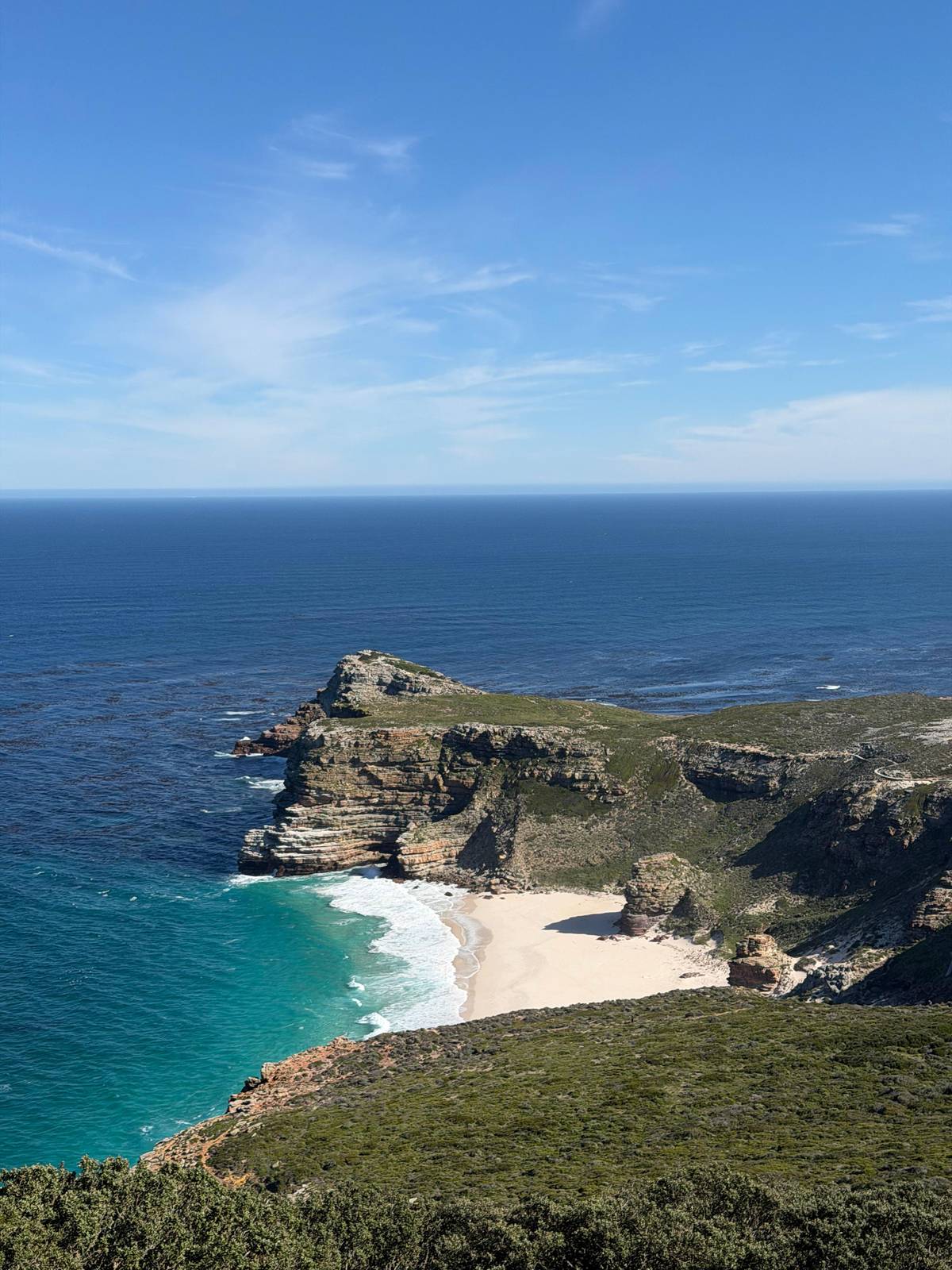
About 2 hours here on the day tour; two lighthouses and the Flying Dutchman funicular.25
In Google Maps ↗ - 9Stony Point
The CapeNature colony in Betty's Bay, 70 to 90 minutes' drive from Cape Town.2627
In Google Maps ↗ - 10Cape of Good Hope
Named the Cape of Storms by Dias in 1488; the day tour spends 30 minutes here.28
In Google Maps ↗ - 11Cape Point lighthouse
Reached on foot or by funicular; one of the two lighthouses still works.25
In Google Maps ↗
Checklist
Before you walk down to the boardwalks
01
Bring
- A bank card: the gate takes no cash
- Hat and sun cream for the boardwalks
- Shoes you can walk on sand in
- The tide table for your day
02
Leave behind
- Selfie sticks near the penguins
- Cigarettes and alcohol
- Your dog, which cannot go on the beaches
Price check
A penguin trip for your group
Choose a tour and the number of guests.
People
Total from$74
from, per person $37
Check availabilityfree cancellationTotals take the cheapest adult fare a Viator or GetYourGuide listing shows and multiply it by the guests you pick, converted with the ECB reference rate; SANParks fees are paid separately at the gates, and the final sum appears at the seller's checkout.
Video
A visit to the penguins of Boulders Beach
YouTube is contacted only once you press play on the video.
Entry, gate times and the rules
Boulders is one of the park's pay points, so you pay a daily conservation fee at the gate.22 For 1 November 2026 to 31 October 2027, SANParks lists R57 for a South African adult, R118 for a SADC national and R282 for an international visitor, with children at R27, R59 and R138; check its rates before you go.4 The gate is cash-free, so bring a card.15
Gate times follow the light. SANParks lists 07:00 to 19:30 in December and January, 08:00 to 18:30 in February, March, October and November, and 08:00 to 17:00 from April to September.5 Times can change without notice, so check before you set out.29
The rules are short. No alcohol, no smoking, and no touching or feeding the penguins, whose beaks SANParks compares to razors.3031 Boulders is also a no-take zone of the marine protected area, so shells, sand and sea life stay where they are.3233
Getting there from the city
You can drive, take the train or join a tour. SANParks says a railway runs from Cape Town along the False Bay coast to Simon's Town, and SANCCOB puts the town 35 km south of Cape Town.1734 Parking near the colony is limited, so in the summer peak SANParks advises arriving early.16
A tour removes the logistics. A penguin day tour sold on Viator collects you at a City Sightseeing stop in Cape Town and gives you about an hour at Boulders, about 2 at Cape Point and half an hour at the Cape of Good Hope, all in 8 hours, from $37. Park fees are paid on top, on the day.
If the penguins are your only goal, half-day trips give the colony more time: one GetYourGuide listing spends 2 hours at Boulders in a 5-hour outing, from $37. Either way, the coast road down from Muizenberg is a beautiful drive in itself.
Why the colony needs careful visitors
The birds you see are part of a species in serious trouble. SANCCOB reported in 2024 that the IUCN moved the African penguin from Endangered to Critically Endangered, and that it has already lost 97% of its population.935 The main driver, SANCCOB says, is a lack of food made worse by commercial fishing around the breeding colonies.36
Boulders cannot fix that alone, but it can stay a calm place to breed. SANParks lists irresponsible tourism and domestic pets among the suspected causes of the decline at the colony, next to oil spills, overfishing and the effect of warming seas on fish.37 Every visitor who stays on the boards and keeps a polite distance helps.
People work here every day for the birds. SANCCOB keeps four Penguin and Seabird Rangers in Simon's Town because of the amount of contact between people and wildlife in the area.38 If you see a bird tangled in fishing line or covered in oil, tell a ranger or the staff at the gate rather than trying to help it yourself.
Making the most of your time at the colony
Start at the boardwalks, while you are fresh and the light is good. Walk slowly, stop often, and let your eyes adjust to the scene: at first you see a crowd of black and white, then single birds preening, braying, squabbling over space or waddling down to the water. Give the scene a little while before you reach for the camera; the best moments come once the birds forget you are there.
Then go down to the swimming beach if time allows. SANParks calls it ideal for children, because huge boulders shelter the cove from currents, wind and big waves, but it also reminds you to take care.23 Penguins sometimes wander across the sand here too, so give them room and keep your hands to yourself.31
Finish with a look at the tide. Beach space depends on it, SANParks says, so low tide gives you more room on the sand.39 Rangers patrol the beach every day, and they are the people to ask if you see an injured bird.40
Book your day
The Cape first, the penguins after.
Boulders, Cape Point and the Cape of Good Hope in 8 hours, with a full refund up to a day before.


You ask,we answer.
Where is Boulders Beach in relation to Cape Town?
In Simon's Town, south of the city. SANCCOB puts Simon's Town 35 km south of Cape Town, and the colony sits on its edge.341
Which beach is best for seeing the penguins?
Foxy Beach. SANParks says the penguins are best viewed there, from the boardwalks.3
How much is entry?
R282 for an international adult. That is the SANParks fee for 1 November 2026 to 31 October 2027; a child pays R138.4
Can I pay in cash?
No. The Boulders gate is cash-free and takes debit and credit cards only.15
What time does the gate open?
07:00 or 08:00, by season. 07:00 to 19:30 in December and January, 08:00 to 17:00 from April to September.5
Can I bring my dog?
Not onto the beaches. Dogs are allowed only on Willis Walk, and only on a leash.13
How many penguins live there?
About 2,200, by the brochure. The SANParks brochure gives that figure for recent years; the colony began with two pairs in 1982.7
Sources
What this guide is based on
- 1↩
- 2SANParksBoulders Penguin Colony brochure↩
- 3SANParksBoulders Penguin Colony brochure↩
- 4SANParksDaily conservation fees 2026/27↩
- 5↩
- 6SANParksBoulders Penguin Colony brochure↩
- 7SANParksBoulders Penguin Colony brochure↩
- 8↩
- 9SANCCOBAfrican Penguin newly classified as critically endangered as breeding pairs fall below 10,000↩
- 10↩
- 11↩
- 12↩
- 13SANParksBoulders Penguin Colony brochure↩
- 14↩
- 15↩
- 16↩
- 17↩
- 18SANParksBoulders Penguin Colony brochure↩
- 19SANParksBoulders Penguin Colony brochure↩
- 20SANParksBoulders Penguin Colony brochure↩
- 21SANParksBoulders Penguin Colony brochure↩
- 22↩
- 23↩
- 24Cape Town TourismFun Things to do in Simon's Town↩
- 25↩
- 26CapeNatureStony Point Nature Reserve↩
- 27CapeNatureStony Point Nature Reserve↩
- 28↩
- 29↩
- 30↩
- 31↩
- 32↩
- 33SANParksBoulders Penguin Colony brochure↩
- 34SANCCOBPenguin and Seabird Rangers↩
- 35SANCCOBAfrican Penguin newly classified as critically endangered as breeding pairs fall below 10,000↩
- 36SANCCOBAfrican Penguin newly classified as critically endangered as breeding pairs fall below 10,000↩
- 37↩
- 38SANCCOBPenguin and Seabird Rangers↩
- 39↩
- 40↩
Keep reading