 In the nest
Guides
Language
EnglishCurrency
US dollar · $On GetYourGuide you see prices in this currency.
Guide · The species
African penguins at Boulders Beach: the facts
The African penguins at Boulders Beach are the only penguins that breed in Africa, and one of the most threatened. Here is how they live through the year, and why their numbers have fallen so far.
Check availabilityfrom $37 · free to cancel
Editorial team, capetownpenguins.comUpdated October 26, 20266-minute read39 sources
The essentials
A penguin that lives in Africa
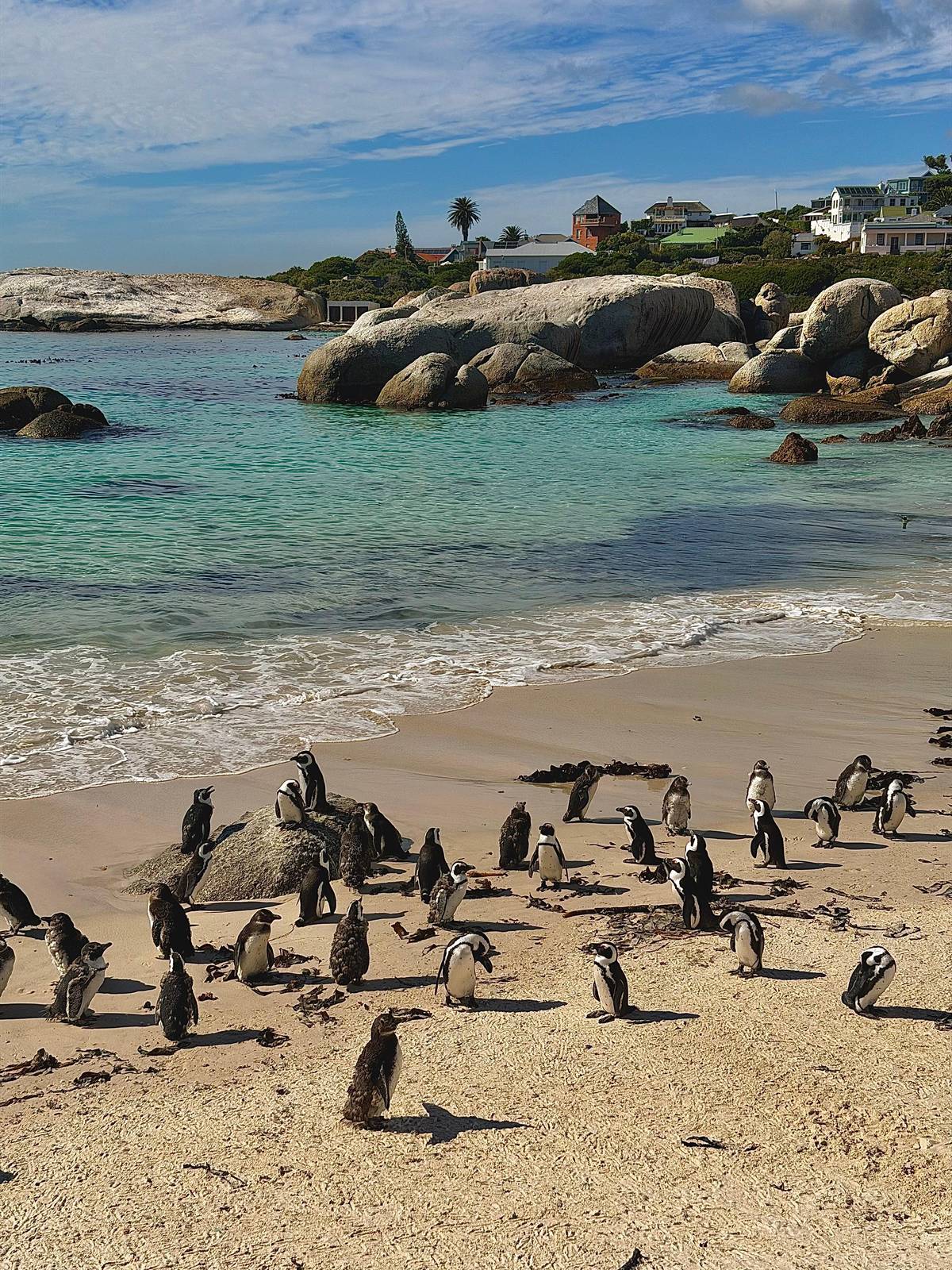
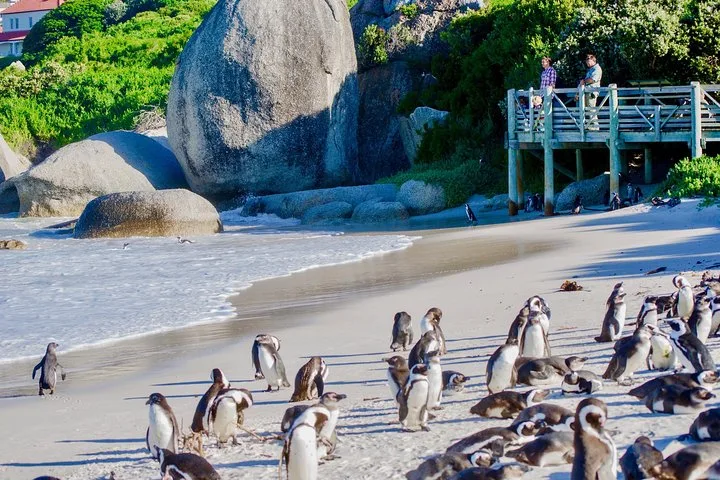
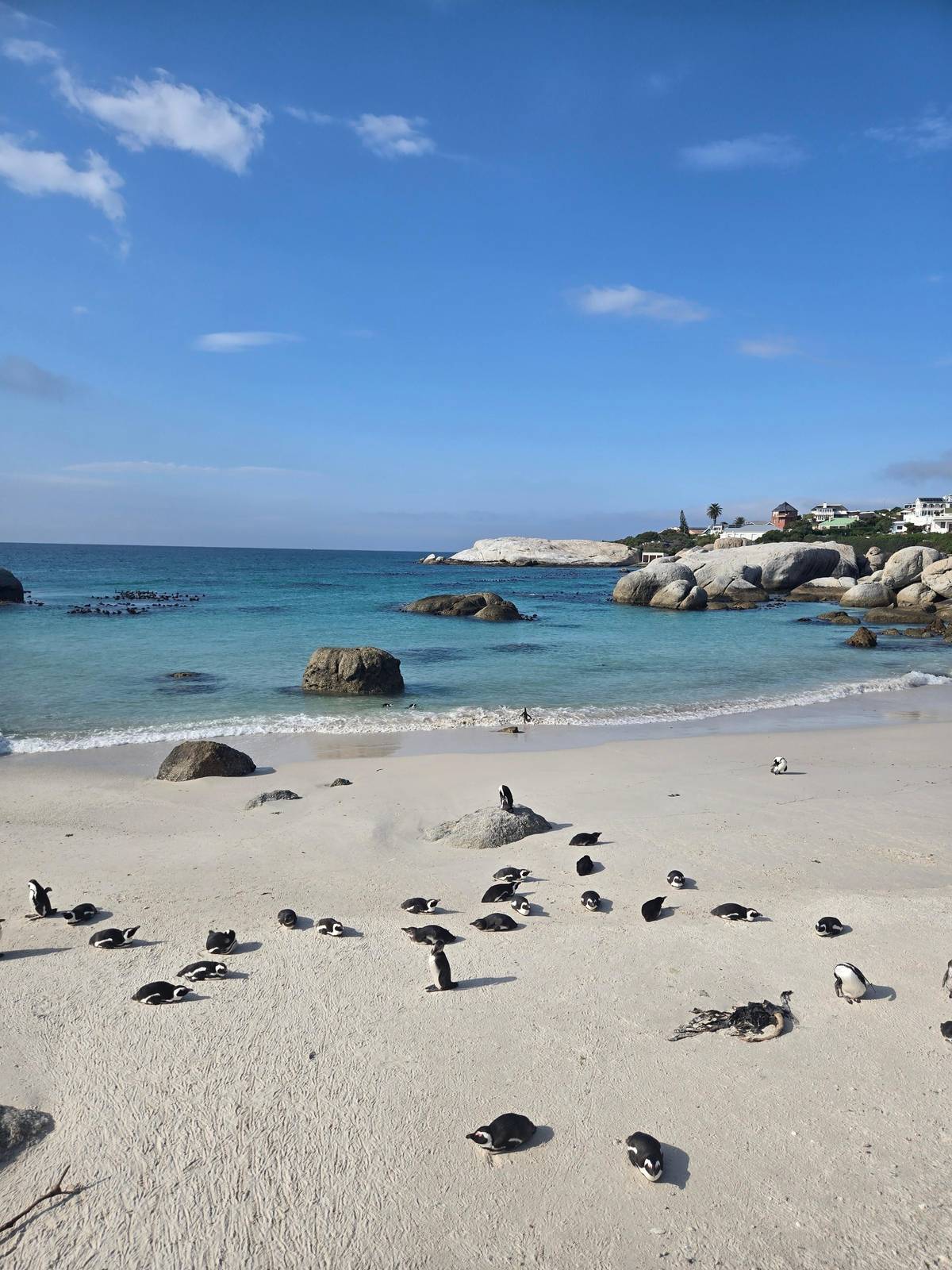
Penguins and Africa sound like an odd pair, but the African penguin belongs here. The SANParks brochure says it is the only penguin species that breeds in Africa, and SANCCOB adds that it lives only in Namibia and South Africa.12 The colony in Simon's Town is one of the few places where you can see these birds at close range in the wild.7 Seeing them against a backdrop of granite and fynbos, rather than ice, is part of the surprise.
You may still hear the old name. Because of their donkey-like braying call, they were once known as jackass penguins, and once you hear the jackass penguins at Boulders Beach call, you understand why.8 The call carries across the cove, especially when pairs greet each other at the nest.
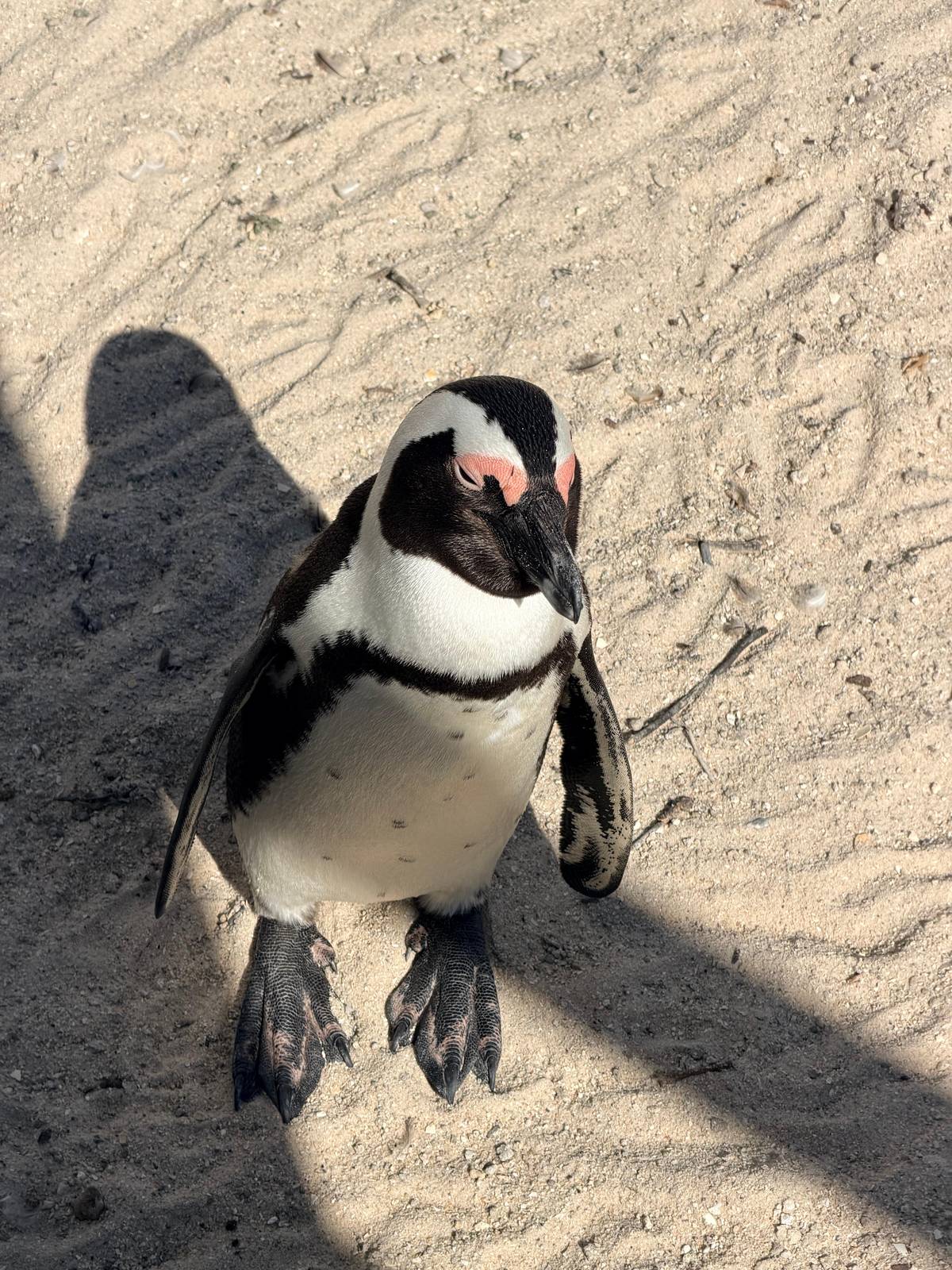
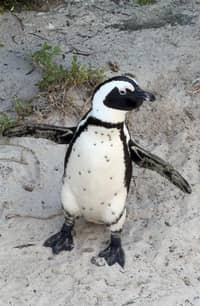
Their colours are not decoration. The brochure explains the black and white plumage as camouflage: the white belly hides a swimming bird from predators looking up from below, and the black back hides it from predators looking down onto the water.9 On the beach, that same suit makes them look formal and slightly comic.
A species in trouble
Key dates for the African penguin
-
1910
About 1.5 million birds
Only some 10% remained by the end of the century.10
-
1983
Boulders colony begins
SANParks dates the colony to this year.11
-
2010
Endangered
Reclassified from Vulnerable on 26 May.12
-
2024
Critically Endangered
The IUCN uplisting, as SANCCOB reported it.3
-
2025
Fishing closures
A court order closes waters around six colonies.13
What they eat and how they swim
African penguins feed at sea. The SANParks brochure says their diet consists mainly of squid and shoal fish such as pilchards and anchovies.14 SANCCOB calls them specialist feeders, which means they cannot easily switch to other food when anchovy and sardine are scarce.15
In the water they are quick and capable. The brochure gives an average swimming speed of seven kilometers per hour and dives of up to two minutes under water.16 Watch the birds at the water's edge: they waddle awkwardly across the sand, then become sleek and fast the moment they reach the sea.
The ocean also holds their enemies. Sharks, Cape fur seals and, on occasion, killer whales hunt them at sea, while on land mongooses, genets, domestic cats and dogs threaten them, and kelp gulls steal eggs and newborn chicks.17 Dogs, for their part, are kept off the beaches at Boulders.18
The penguin year
What happens at the colony, season by season
What you can do
How to visit in a way that helps
Small choices make the colony calmer.
Use the boardwalks
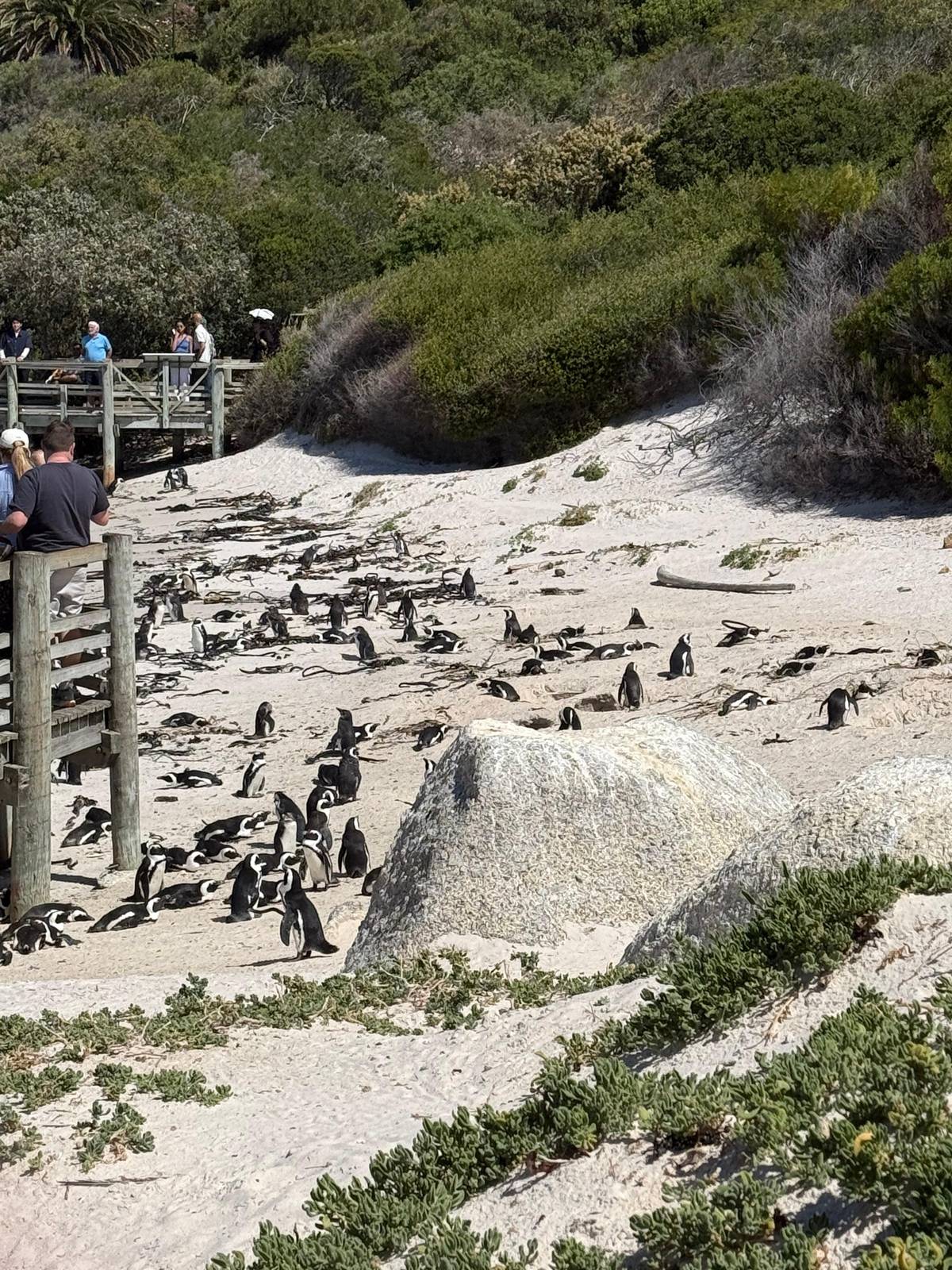
They let you see the birds while keeping them safe.23
Stay still, no touching
Their beaks are as sharp as razors.24
Tell park staff
The brochure asks visitors to report injured animals.25
Leave it off the beaches
Dogs are allowed only on Willis Walk, on a leash.18
Pay the fee, visit quietly
Boulders is a SANParks pay point.26
Their distinctive black and white colouring is a vital form of camouflage - white for underwater predators looking upwards and black for predators looking down onto the water.
The breeding year
The year turns around the moult and the nest. The SANParks brochure says moulting peaks in December, after which the birds head out to sea to feed; they return in January to mate and nest from about February to August.5 The main breeding season starts in February.21
Pairs stay together. The brochure describes African penguins as monogamous, with lifelong partners taking turns to incubate the eggs and feed the young, and says they usually start breeding at about four years of age.21 Nests range from shallow scrapes to burrows, tucked under bushes or among the boulders above the beach.
Chicks hatch in grey down that is not waterproof, so they cannot swim. From about 30 days old both parents go to sea to fish, and chicks left alone gather in groups for protection.27 About 60 days after hatching, some have blue-grey juvenile feathers and are called baby blues.22 A patient look from the boardwalk in the nesting months can show a grey head peeking out from under a parent.
Checklist
Watching penguins well
01
Do
- Stay on the boardwalks
- Give the colony time to settle
- Report injured birds to staff
02
Do not
- Touch or feed a penguin
- Push a selfie stick through the fence
- Enter the nesting areas
Price check
See the colony with a guide
Choose a tour and the number of guests.
People
Total from$74
from, per person $37
Check availabilityfree cancellationTotals take the cheapest adult fare a Viator or GetYourGuide listing shows and multiply it by the guests you pick, converted with the ECB reference rate; SANParks fees are paid separately at the gates, and the final sum appears at the seller's checkout.
Video
African penguins, a documentary on a species in trouble
YouTube is contacted only once you press play on the video.
Why some birds stand still for weeks
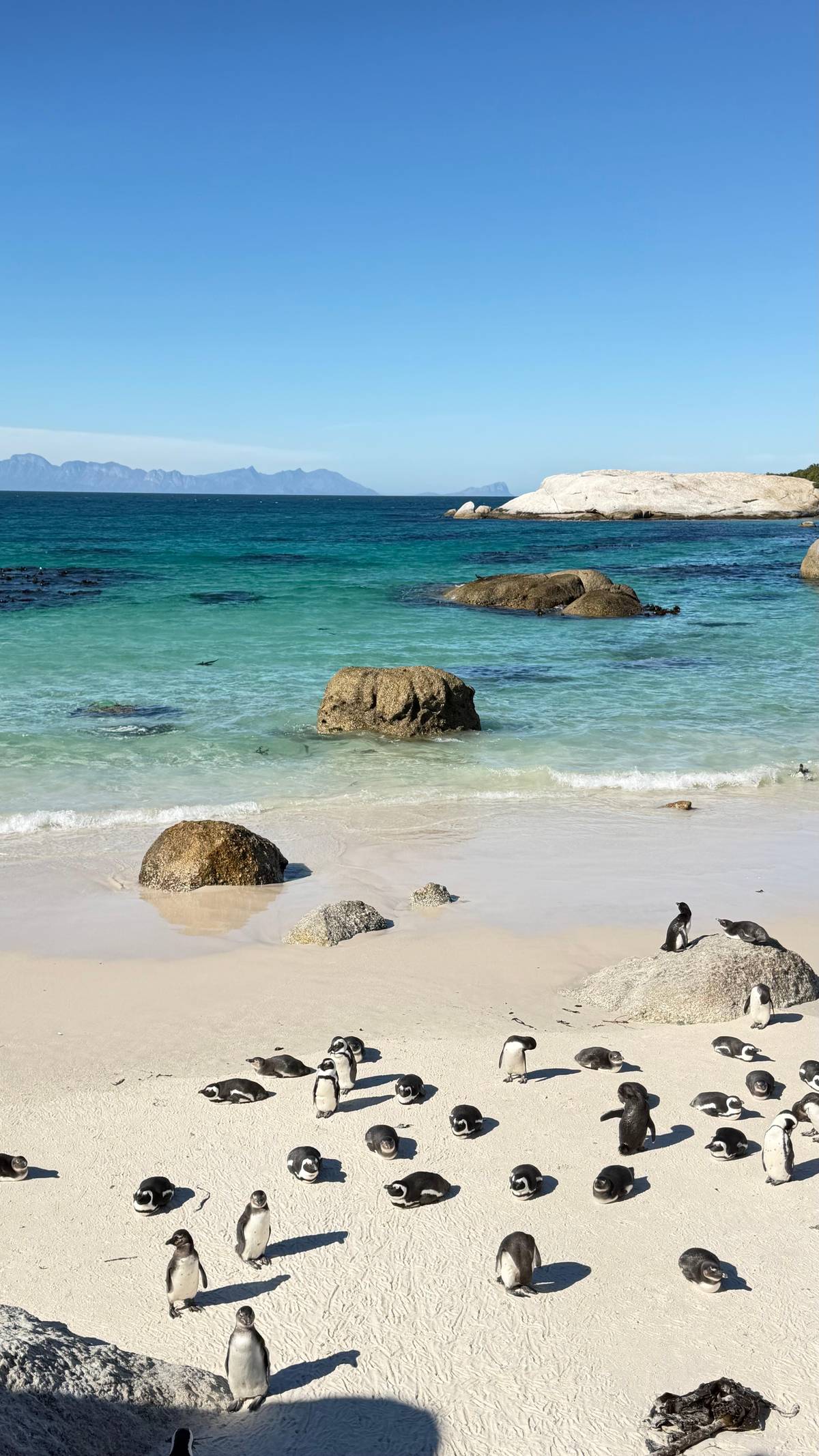
If you visit in December you may see penguins that look ragged and do not move much. They are moulting. The brochure says old worn feathers are replaced each year, and during the moult the birds lose their waterproofing and stay on land for about 21 days.28
The moult is a period of starvation. Penguins fatten up before it, and SANCCOB explains that they are landlocked and must fast while it lasts; a bird that has not fed well enough beforehand may starve.2829 SANCCOB adds that a steady food supply close to the colony is especially critical before and after the moult.30
A moulting bird is vulnerable and should be left in peace. Stay on the boardwalks, keep your voice down, and never try to touch one: SANParks warns that penguin beaks are as sharp as razors.2324 These are some of the most useful Boulders Beach penguin facts to know before you go, because they explain what you will actually see.
A long, steep decline
The decline is long and steep. The SANParks brochure says that of an estimated 1.5 million African penguins in 1910, only some 10% remained by the end of the 20th century, after uncontrolled harvesting of eggs and guano scraping nearly drove the species to extinction.10
Counts of breeding pairs tell the rest. SANParks says the first full census in 1956 found about 150,000 breeding pairs, and only 26,000 were left in 2009.19 For South Africa, SANCCOB reports 15,187 pairs in the 2018 count and an estimated 8,750 at the end of 2023.20 In all, SANCCOB says the bird has lost 97% of its population.4
The status followed the numbers. SANParks records the move from Vulnerable to Endangered on 26 May 2010, and SANCCOB reported in 2024 that the IUCN uplisted the species to Critically Endangered.123 It is the first of the 18 penguin species to meet that category.31
Causes, and what is being done
SANCCOB names a lack of food as a primary cause: climate change reduces the fish, and commercial fishing around the breeding colonies competes for what is left.32 SANParks adds habitat destruction, oil spills and other pollution, overfishing, irresponsible tourism and domestic pets to the list of suspected causes.33
There has been action. SANCCOB reports that on 18 March 2025 a Pretoria High Court order set no-take zones for the sardine and anchovy fishery around six key breeding colonies, year-round, for 10 years with a scientific review after six.13 The closures run to 2035, the year scientists predict the species could be extinct in the wild.34
On the ground, rangers help. SANCCOB keeps four Penguin and Seabird Rangers in Simon's Town, and its ranger at Stony Point removed 69 chicks and 36 eggs from flooded nests in July 2021.3536 As a visitor, the best help you can give is a quiet, respectful visit and a fee paid at the gate.
African penguins in Cape Town today
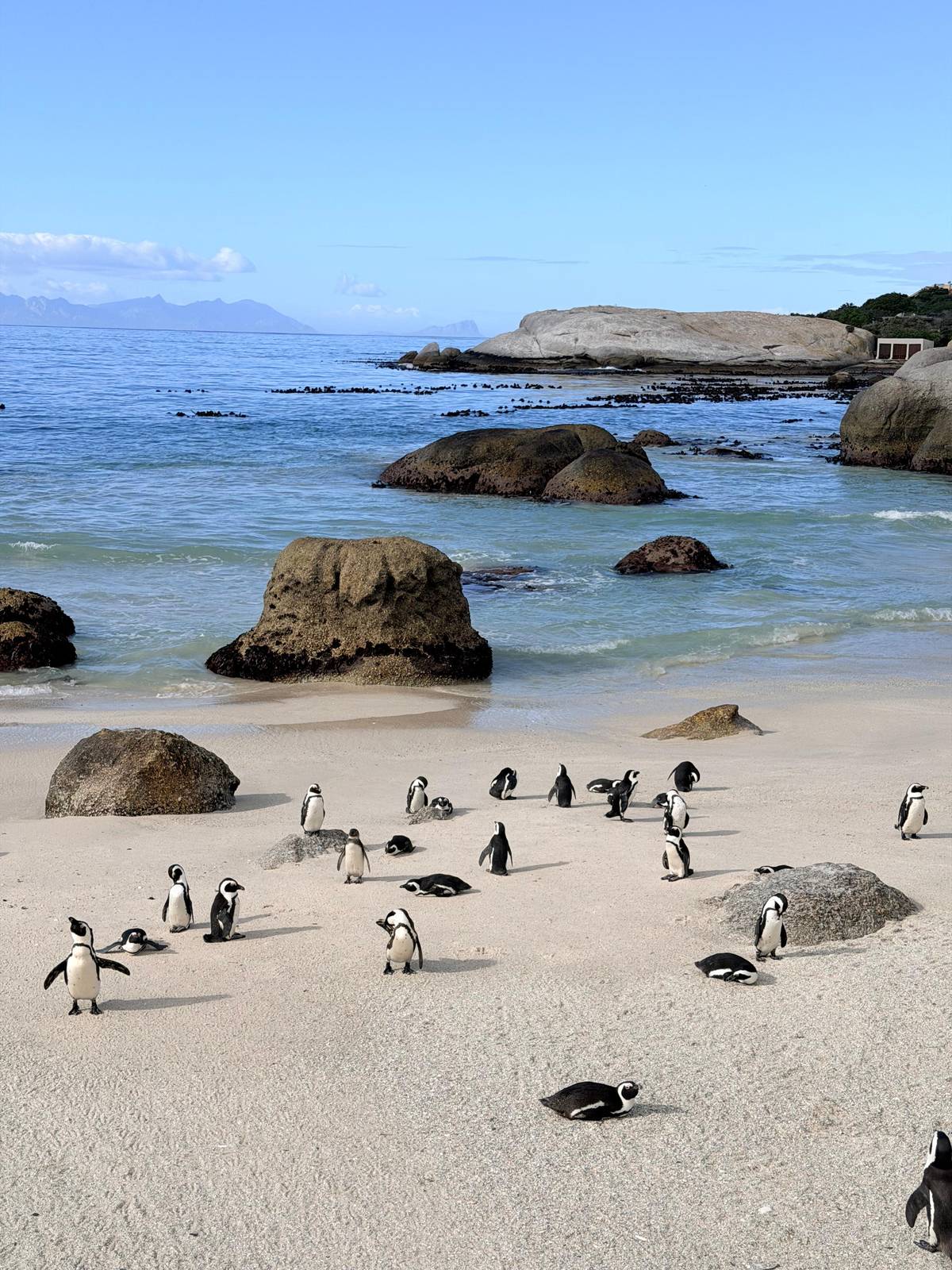
Today the main places to see African penguins in Cape Town are the Boulders colony in Simon's Town and, a longer drive away, Stony Point in Betty's Bay. SANCCOB says these are the two mainland breeding colonies in South Africa.37
Boulders has a story of its own. SANParks dates the colony to 1983, and its brochure says it began with two breeding pairs in 1982 and has about 2,200 birds in recent years.1138 SANParks counted 3,900 in 2005 and around 2,100 in 2011, and the brochure links the earlier growth partly to more pilchards and anchovies in False Bay.1138
Stony Point is the hopeful exception: SANCCOB says it is the only colony that has shown an increase in the last decade and now supports 10% of the global population.39 Seeing both colonies gives you a sense of how fragile, and how resilient, these birds can be. Either way, a visit in the right spirit, quiet, unhurried and on the boards, is the best souvenir you can take home.
Book your day
The Cape first, the penguins after.
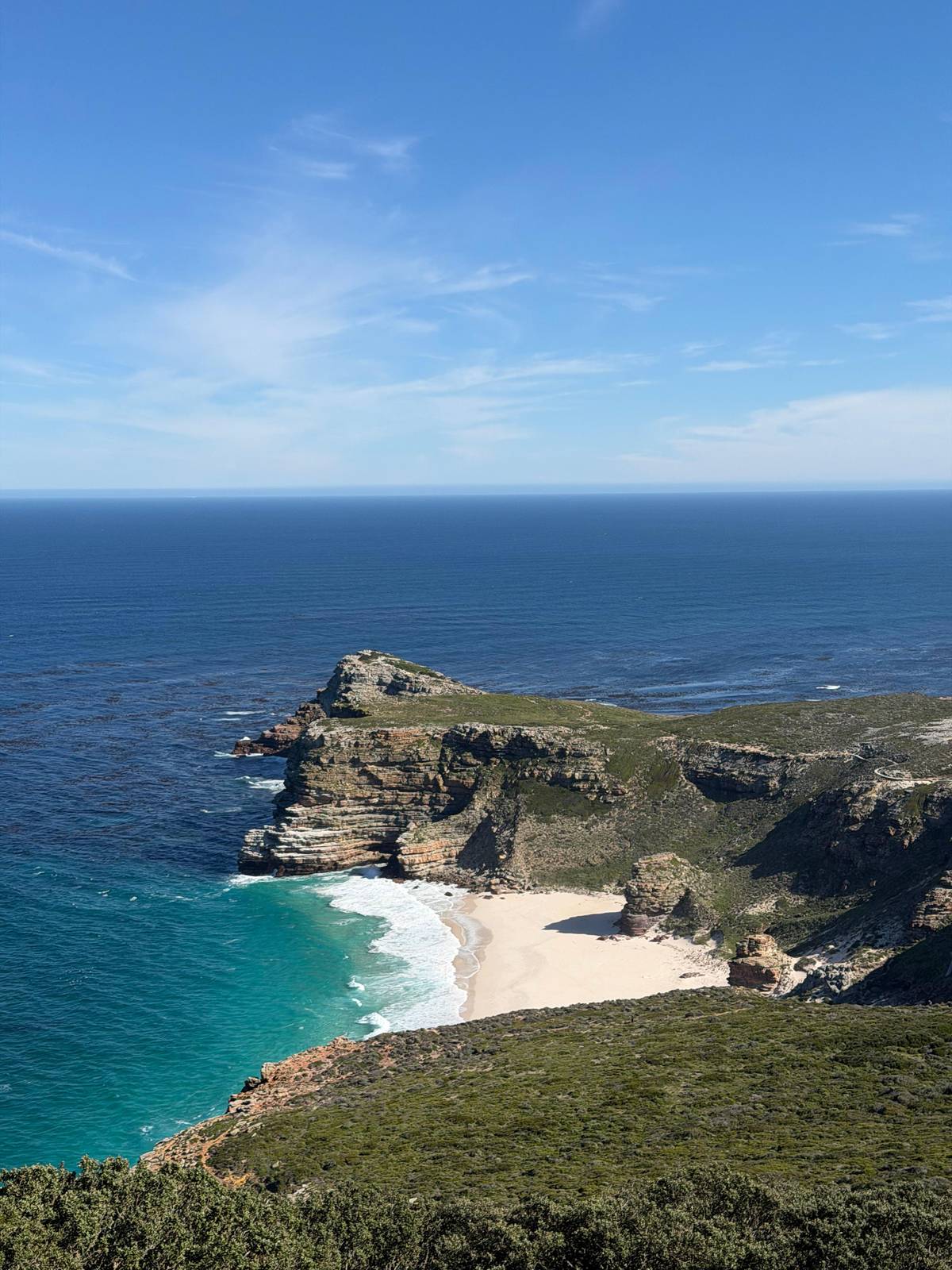
Boulders, Cape Point and the Cape of Good Hope in 8 hours, with a full refund up to a day before.


You ask,we answer.
Why were they called jackass penguins?
For their braying call. The SANParks brochure says the donkey-like bray gave them the name.8
What do African penguins eat?
Squid and shoal fish. Mainly pilchards and anchovies, says the SANParks brochure.14
How fast do they swim?
About seven kilometers per hour. And they can stay under water for up to two minutes.16
When do they breed?
From February. The main breeding season starts in February; nesting runs to about August.215
What are baby blues?
Young penguins. About 60 days after hatching, some wear blue-grey juvenile feathers.22
Are African penguins endangered?
Critically Endangered. SANCCOB reported the IUCN uplisting in 2024.3
How many breeding pairs are left?
About 8,750 in South Africa at the end of 2023. SANCCOB gives that estimate, down from 15,187 in 2018.20
Sources
What this guide is based on
- 1SANParksBoulders Penguin Colony brochure↩
- 2↩
- 3SANCCOBAfrican Penguin newly classified as critically endangered as breeding pairs fall below 10,000↩
- 4SANCCOBAfrican Penguin newly classified as critically endangered as breeding pairs fall below 10,000↩
- 5SANParksBoulders Penguin Colony brochure↩
- 6SANParksBoulders Penguin Colony brochure↩
- 7SANParksBoulders Penguin Colony brochure↩
- 8SANParksBoulders Penguin Colony brochure↩
- 9SANParksBoulders Penguin Colony brochure↩
- 10SANParksBoulders Penguin Colony brochure↩
- 11↩
- 12↩
- 13↩
- 14SANParksBoulders Penguin Colony brochure↩
- 15↩
- 16SANParksBoulders Penguin Colony brochure↩
- 17SANParksBoulders Penguin Colony brochure↩
- 18SANParksBoulders Penguin Colony brochure↩
- 19↩
- 20↩
- 21SANParksBoulders Penguin Colony brochure↩
- 22SANParksBoulders Penguin Colony brochure↩
- 23↩
- 24↩
- 25SANParksBoulders Penguin Colony brochure↩
- 26↩
- 27SANParksBoulders Penguin Colony brochure↩
- 28SANParksBoulders Penguin Colony brochure↩
- 29↩
- 30↩
- 31SANCCOBAfrican Penguin newly classified as critically endangered as breeding pairs fall below 10,000↩
- 32SANCCOBAfrican Penguin newly classified as critically endangered as breeding pairs fall below 10,000↩
- 33↩
- 34↩
- 35SANCCOBPenguin and Seabird Rangers↩
- 36SANCCOBPenguin and Seabird Rangers↩
- 37SANCCOBPenguin and Seabird Rangers↩
- 38SANParksBoulders Penguin Colony brochure↩
- 39SANCCOBPenguin and Seabird Rangers↩
Keep reading